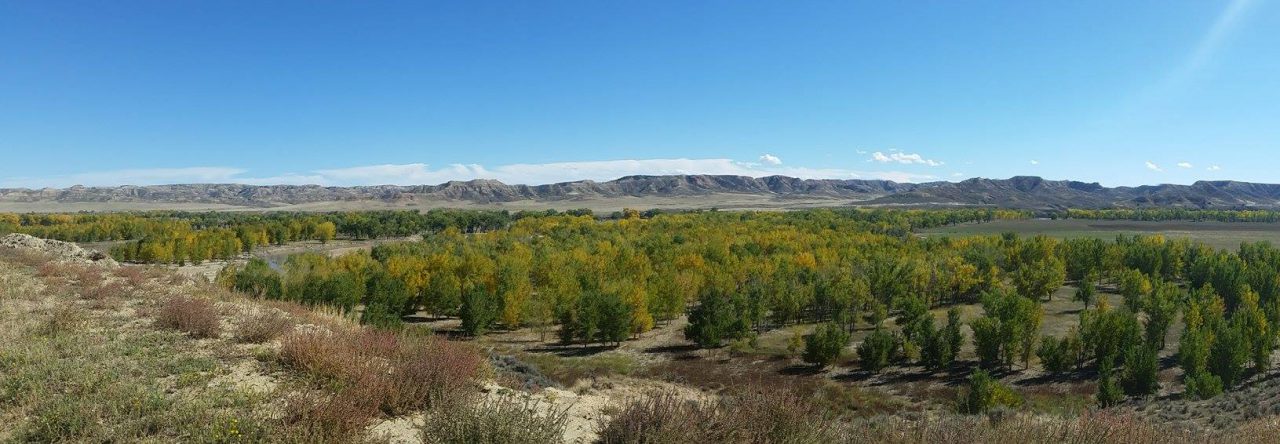
The Mobile Hunt Camp: A DIY Tutorial

When planning our hunting trip we debated on many options for sleeping arrangements to name a few, sleeping in tents, a large wall tent, taking a camper out, staying in a hotel, a truck bed tent, or converting a cargo trailer. We settled on the cargo trailer with the thought that this will most likely not be our last trip out west and it would get used on multiple trips so it was economically the best option. I have a 30′ camper that I could have taken but between the weight and pulling it back unknown dirt roads didn’t make it a viable option. Justin and I had decided we’d split the cost of the trailer and the build. He being an electrician would wire the trailer up so we could put basic lights and outlets in it.

We started out with the idea of getting a simple 7/14 trailer and converting it. I spent a few weeks scouring the internet, we obviously wanted to spend the least amount of money on this item, but get something that wasn’t going to fall apart. After searching for used trailers for a while I wasn’t coming up with anything suitable in the area. They were all heavily used contractor trailers, and I didn’t want to take the chance on something like that. We found a trailer dealership about an hour and a half north of us that dealt in a lot of volume, and had very reasonable rates. They had all different sizes and the price difference between a 7×14 and an 8×16 trailer was so minimal that we opted for the extra room. After taxes and tags we paid $4300 total for the trailer.

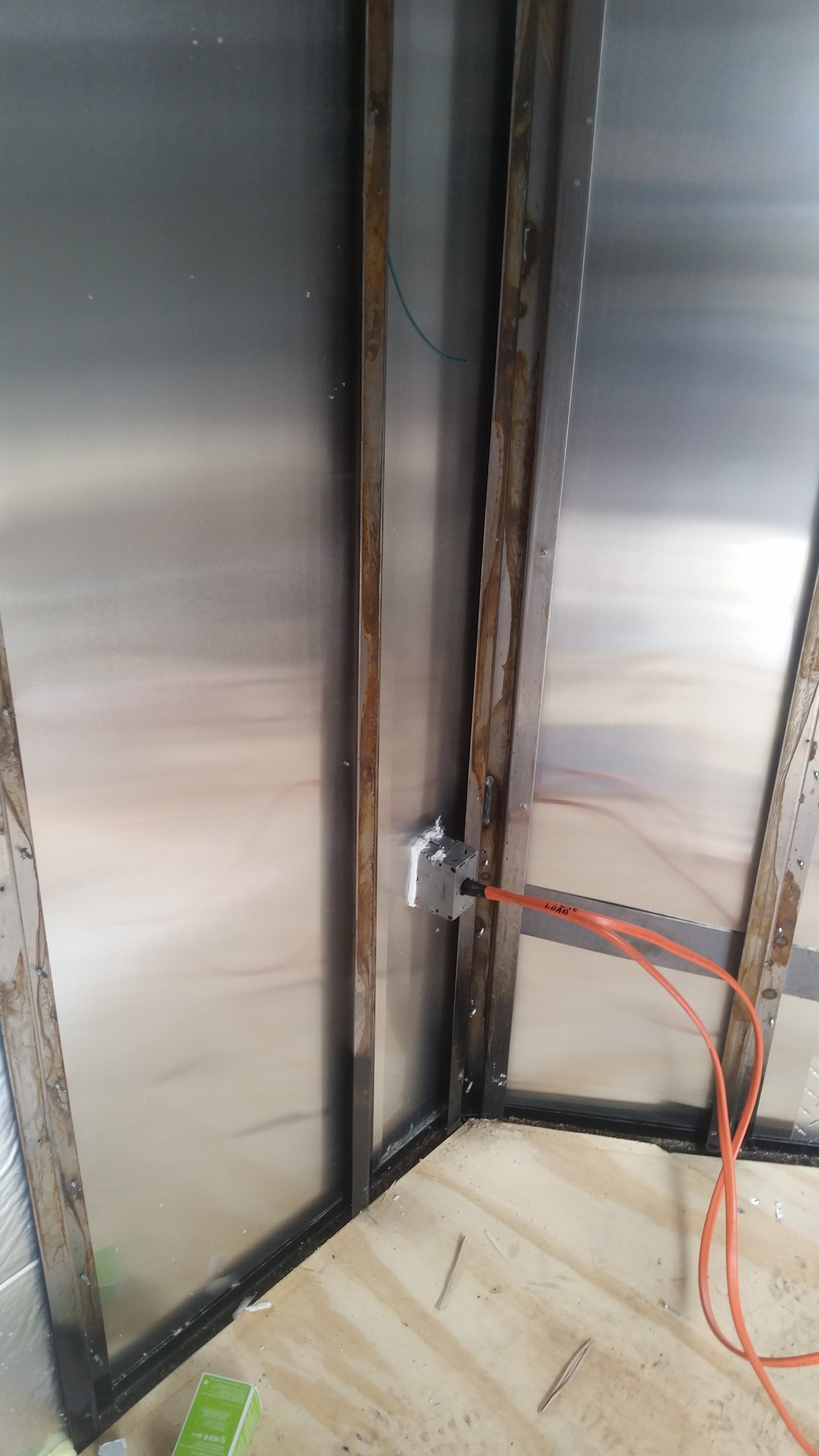
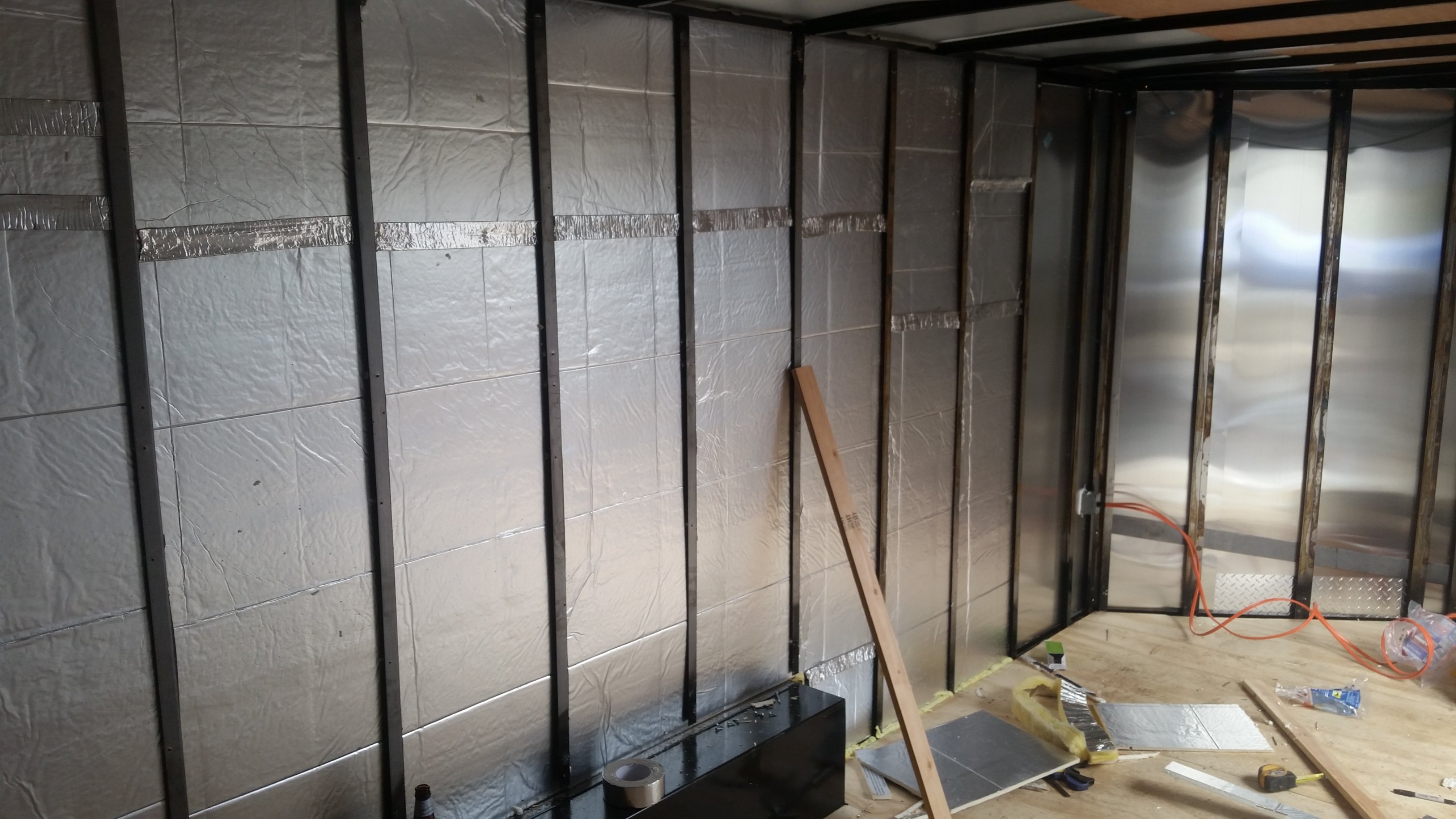
We got it back to my house and unhooked it. I worked on taking all the plywood walls off. Exposing about 1″ of space to put insulation in. I stopped at lowes and bought 1/2″ foam board insulation and some luan for the ceiling. The insulation job didn’t take long at all using a razor knife to cut the boards to size, they slipped right in without difficulty. The ceiling was fastened with the same self tapping screws the trailer came with but a little shorter. Before we put the ceiling up, Justin made his light holes, and ran his wiring throughout the trailer.

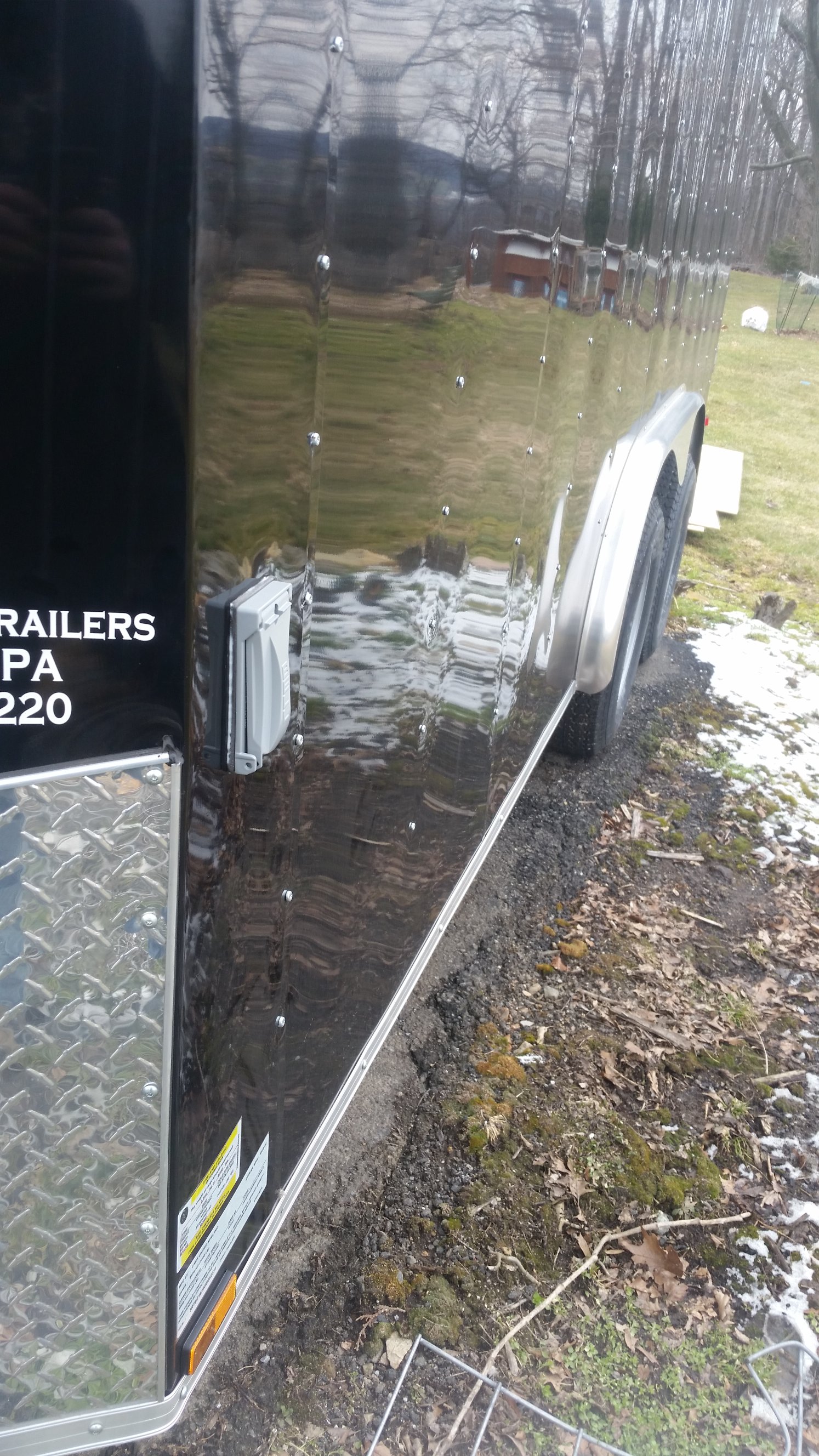
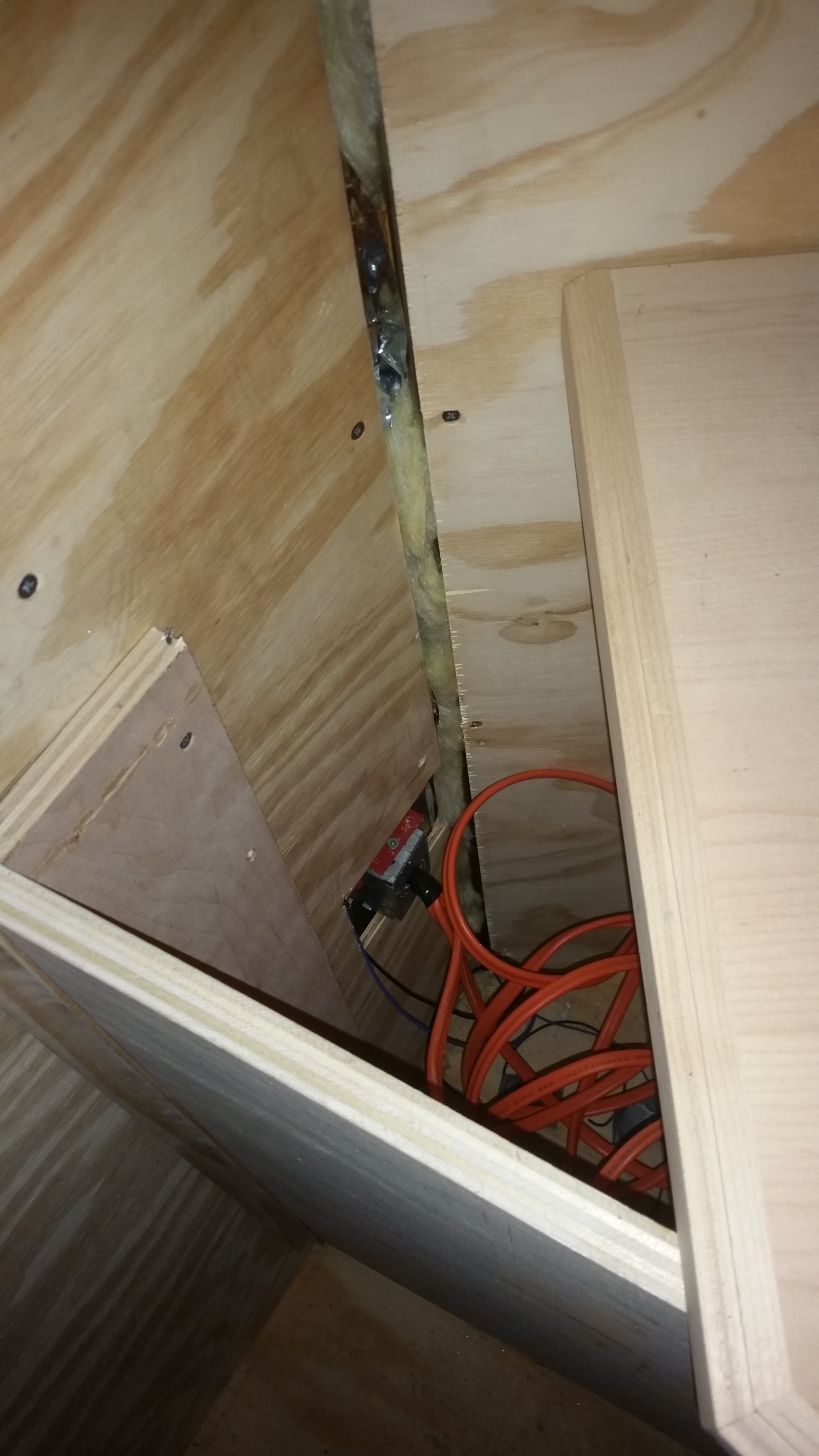
We put 2 overhead 12v lights, one cabinet light, 1 porch light, and 2 spotlights out the back of the trailer. The spot lights were in case we had game to clean in the evening we would have plenty of light to take care of that. Justin wired all the switches and lights up in just a few hours. Everything was powered by an interstate RV battery. That was connected to a converter box, and everything was installed in the front cabinets of the trailer. We had a 120V outdoor outlet installed on the outside of the trailer so that the battery could be charged by a generator, and one 120V double outlet installed inside the trailer to run things like the coffee pot and microwave. One of the outside outlets went directly to the converter and the other one powered the inside outlets, so the generator could be plugged in to one or both of the outside outlets.
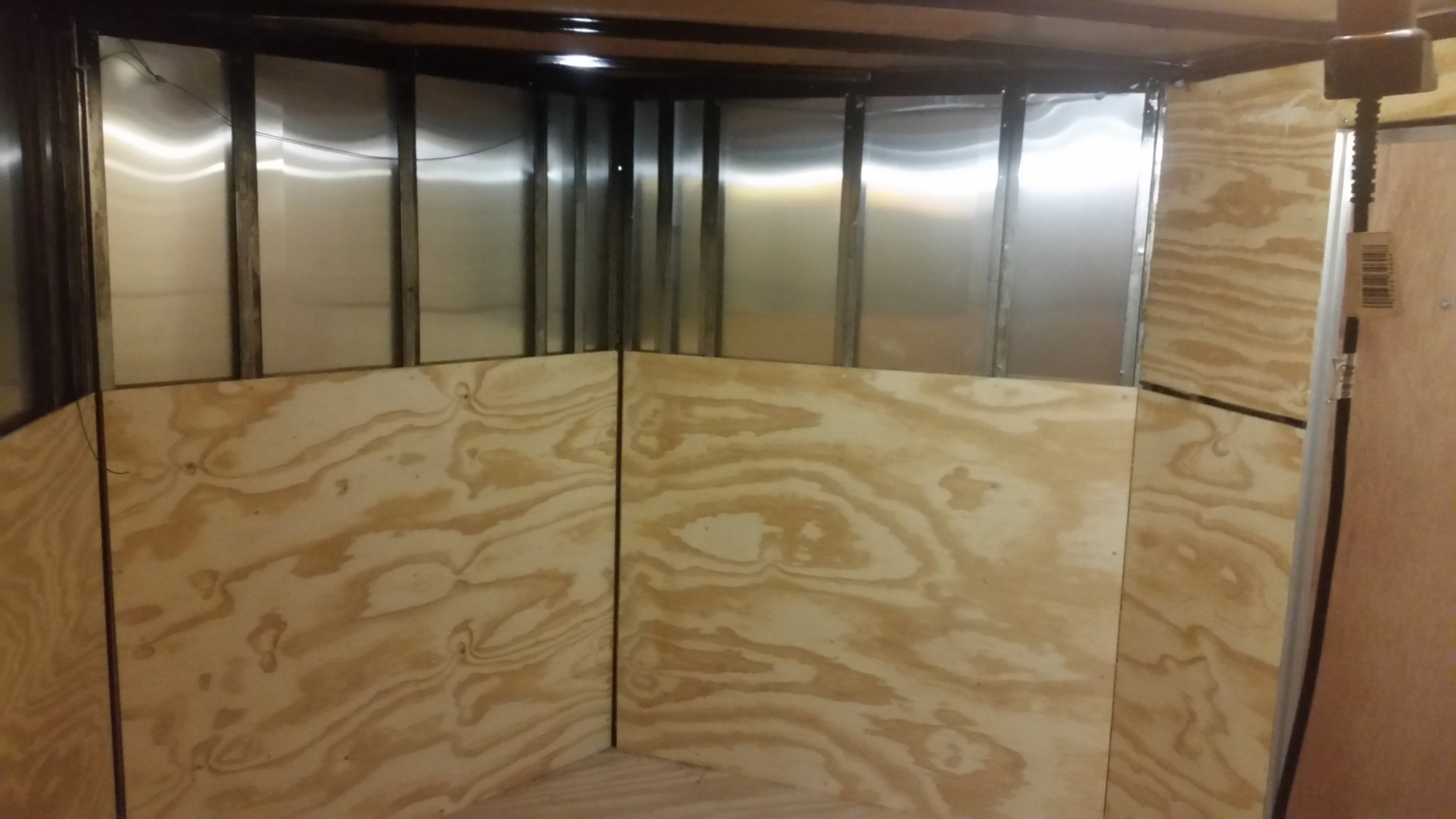
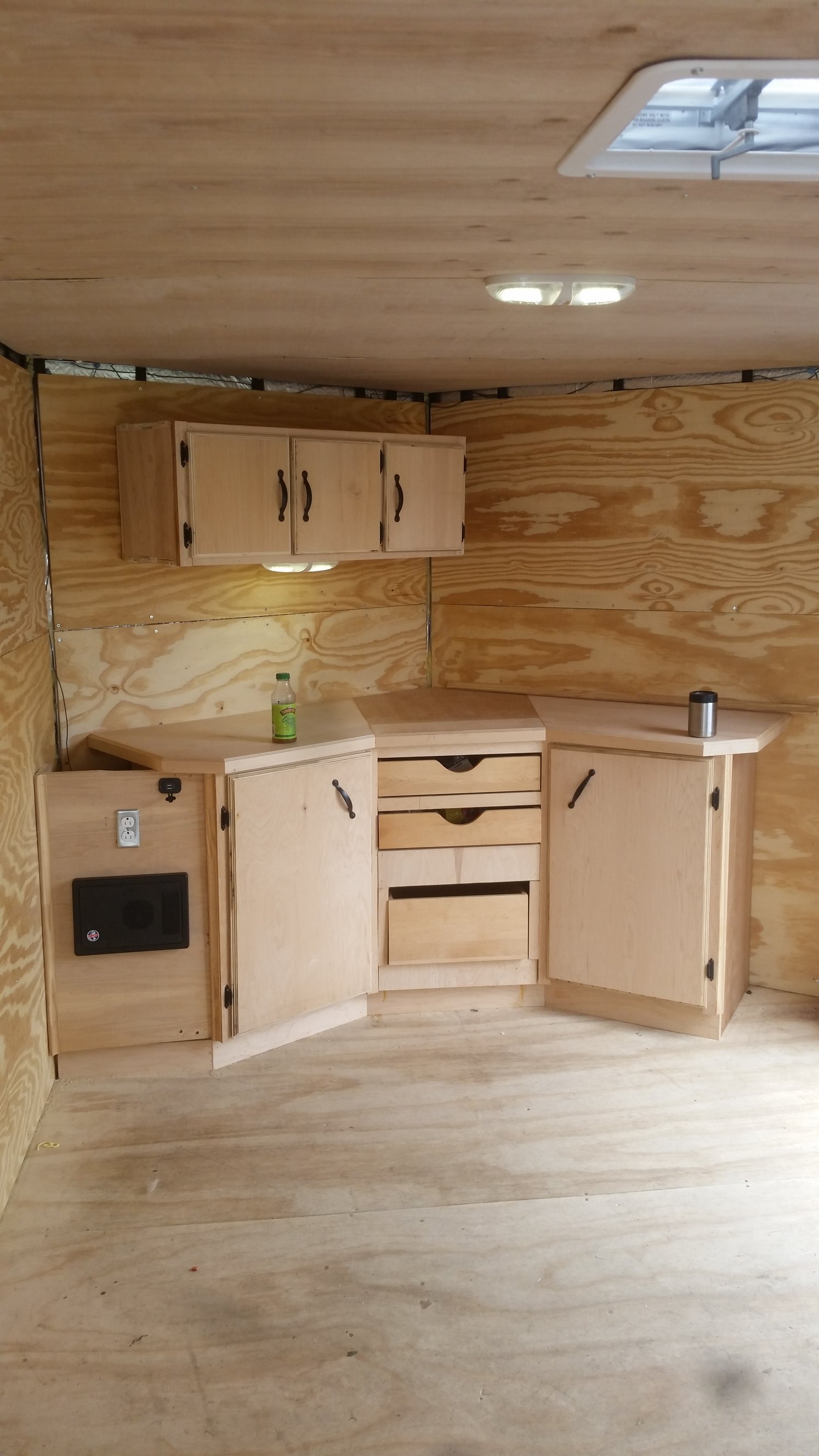
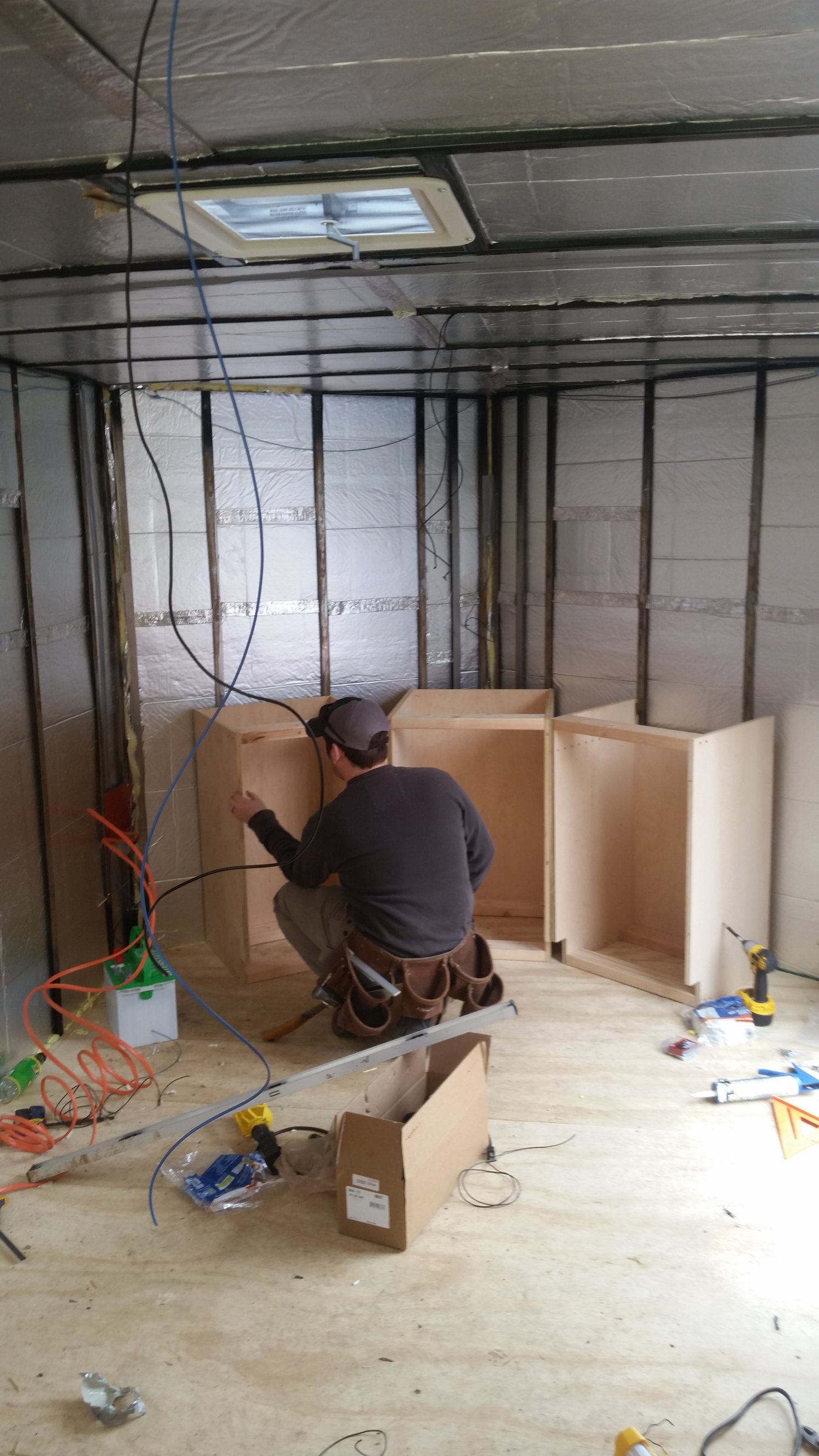
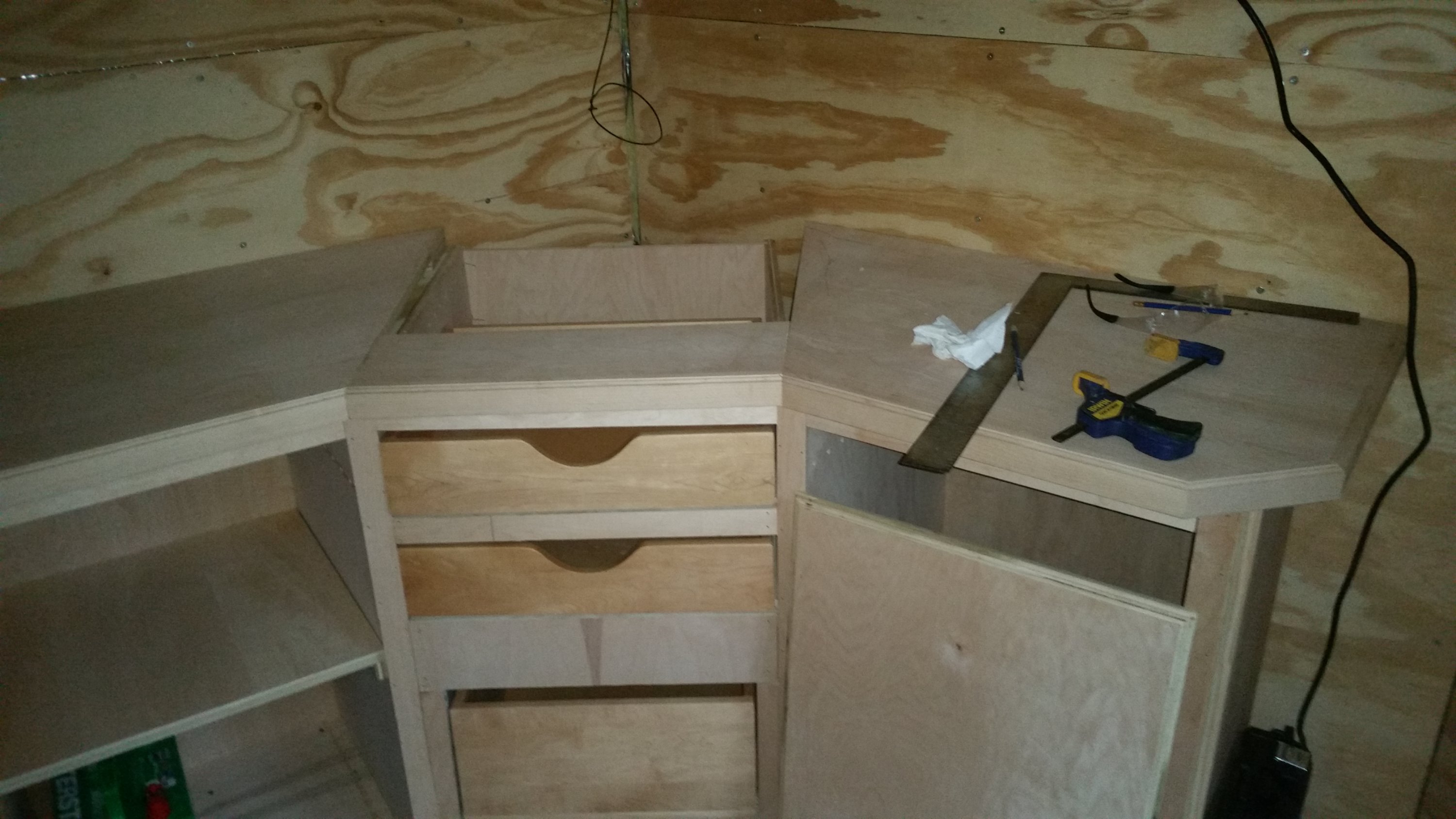
Todd was able to get us cabinet grade plywood from someone he had done some work for. The homeowner was a cabinet maker for years and had a stockpile of it in their basement that they wanted to get rid of. Todd and I went over to their house and loaded up with everything we needed. The original plan was to build a counter top straight across the front of the trailer. The trailer was a V-nose model so we had a little extra room up front to work with than we had thought. Todd got to work on putting the cabinets together in the front of the trailer, we ended up with a cabinet on the left and right of the V, with a middle section for some drawers. To the left of the cabinet we left an area to put the converter in and room to fix any of the wiring if we needed to.
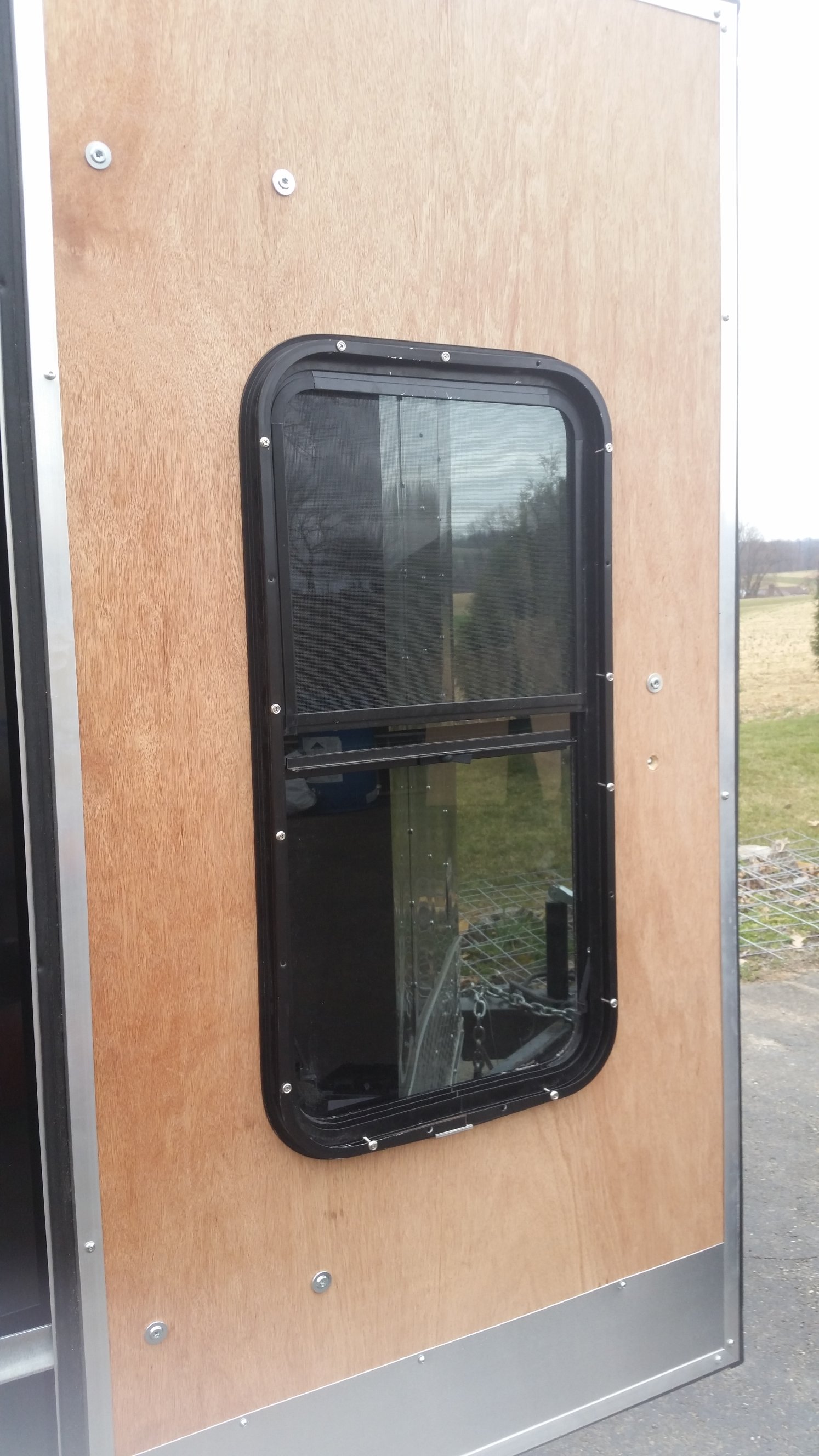
I liked the idea of having a window on the trailer door, so I found a used RV window on ebay and bought that for $80. Nick helped me take the door off and cut the hole for the window. The door was much thinner than an RV door so we had some obstacles to overcome but it all worked out. We installed an RV door latch, instead of using the locking bar to get in and out all the time.
The bunk bed idea I had was great in theory, I wanted something that could be folded up onto the walls and be secured so you could still use the trailer for cargo space. In the end wasn’t practical with the height the beds would have to be at and no one really trusted sleeping on a folding bunk bed. So some of the other guys came up with the idea of putting 2×6 rails lengthwise down the trailer and cutting out 2×4 notches widthwise in the rails so we could pop the cross boards in when we wanted to set up and throw 2 pieces of pre-cut plywood on top of the rafters to make a 2nd sleeping area. It worked out awesome. We were able to fit 2 queen size air mattresses under the loft and another air mattress up top. So four people slept under and 2 people slept on the loft, plus we had extra space for gear and clothes up top. Nick fashioned a nice wooden fold-able table together and installed it across from the side door. It comfortably seats 4 to 5 people.

All in all we probably spent a little over $5k on the trailer build and it was well worth it in the end. If you have any questions feel free to leave a comment and I’ll get back to you.

Things to Consider When Planning A DIY Hunt

While their are endless amounts of things to consider when planning a DIY hunt their are some basics that need to be covered. They should probably be thought of well in advance and no two lists are ever going to be the same. I can attest to the planning process that we undertook coming from 28 hours away to an area we never hunted before in North East Wyoming. The fundamentals will remain the same, but the specifics can go on forever.

The first few things were probably the most difficult, and my time in the military taught me that their is always a solution to every problem, if you haven’t found it yet, you’re not working hard enough. Number one was transportation, we had planned on taking 6 guys out west, driving continuously until we arrived, stopping only for fuel. We all have reliable transportation, but trekking 1800 miles cross country and back is hard on any vehicle. Through watching youtube videos on other DIY hunters I realized that taking at least one cargo trailer was going to be a must. So that was going to add extra wear and tear on the vehicles. Matt has an almost brand new diesel ford pickup and was willing to take his truck if we wanted him to. My warranty on my 2011 Nissan Titan was almost up anyway and the other guys’ didn’t have crew cabs, or their truck needed too much work to take so I decided to take my truck as well. After changing the front brakes throwing some new front shocks on last minute she was ready to go.

The trailer idea came from the youtube channel The heart of hunting, they give a great tutorial on how they transformed a cargo trailer into a mobile hunting camp. This sort of knocked out two of the major concerns for me, sleeping arrangements and cargo space. While we would have two truck beds to fill up, you wouldn’t want anything back there while it was raining on the way out or back. I’ll do a follow up post on our trailer build, where we got it, and lessons learned.

The route out there I just google mapped the directions and studied where we could gain ground or shave some time off. Unfortunately google took us through the heart of Chicago on route I90. While this probably wouldn’t have been horrible, we had a few ‘over the road’ trucking friends that advised heavily against going through Chicago anytime past 6am. We had a back up plan to bypass Chicago by using route I80 to I39 which would bring us back on I90 after all the traffic. Other than that it was pretty much I90 the whole way there, we ended up staying a few miles off I90 once we got out there.

The food situation was fairly easy, some people pitched in and brought a pre-made dish that their spouse made, like a casserole, we took out a large 1 gallon can of spaghetti sauce with noodles. Someone let us borrow their six foot yeti cooler so we could have some sort of refrigeration. We had a crate of eggs someone else was able to acquire from a friend that has a lot of chickens. We had took along a small Coleman fold-able camping stove, and a turkey fryer with a propane tank. Todd generally takes charge of the cooking and for good reason, the rest of us suck at it. So he was able to lead that department, in getting a meal list together and making sure we had snacks, and everything else we needed.  The only thing left to do at that point was to figure out what kind of gear we’d need and how to actually hunt the animals we had tags for.


Rounding Up The Troops

By the time I had settled on the species and area we were hunting it was late December and the late archery season was beginning to wind down in PA. This freed up some more time to be able to come up with a solid hunt plan. At this point I had already began soliciting guinea pigs for my grand DIY Wyoming hunt plan. The state of Wyoming allows you to apply for tags in groups of no more than 6 hunters. This seemed to be the best number to work for many other things. We wanted to hunt in pairs, take 2 vehicles in case anything were to happen on the way out, sleeping arrangements, and it prevented us from overcrowding each other while out hunting. So from the beginning myself, Justin, and Nick decided six was going to be the limit. We asked a few guys that had gone to bear camp with us and while people were interested, they just weren’t ready to “pull the trigger” yet. The total tag cost was going to be right around $900 and we had figured fuel and food would be another $400 or so. That’s a big commitment to make when you have no idea what to expect.

Justin was able to get his dad John on board, and Todd was a yes so we had 5 who were a definite to go. It seemed everyone else we had asked just couldn’t make it happen between work, weddings, money, or other situations, they were out. We finally convinced one of our friends that it would be worth taking the week off from farming to come along. At over 6 feet tall and 250 pounds, he’s the epitome of a farm boy and has no issues throwing on a pack. Our first week of October trip just happens to coincide with the fall corn harvest and he was torn between staying to work or going to hunt. He pulled through and made the right decisions. With everyone on the list we were ready to put in for the draw.

We had a few thirsty Thursday WayPoint hunt meetings between January to March to discuss logistical items, or at least that what we told our significant others. We were faced with hunting a terrain none of us had ever experienced before for game we knew almost nothing about. I had more rocks to turn over to figure out what was next.

Where To Start

In today’s day and age the answer to most questions is at your finger tips, if google can’t figure it out it’s probably not the search engine that’s the problem. In the past I had put together charter fishing trips to Lake Ontario for the late summer salmon run and had done all the research on where to go, when to go, and who to go with. If you’re ever in the mood for some good affordable salmon fishing check out Capt. Greg at Pleasure Unit Charters for some awesome fishing. While hunting out west would be a more challenging research task, I had the basic building blocks of what I’d need. When planning trips like this, it’s hard to please everyone so it’s good to have your best case scenario, with a of couple back up plans.

I began with Wyoming since I knew we wanted to do an Antelope hunt so I set out to understand how the tag system works. If you’re not familiar with the preference point/random draw system in WY you can go to their website here and they go into great detail about it. I navigated over to their hunt planner link and started to look at hunting zones for antelope. They have well over 100 hunting zones spread throughout the state for Antelope. I downloaded the Antelope hunting seasons PDF which breaks down each zone, by tag type, kill quota, hunt date, and any limitations. I took a look at my work schedule and knew for a rifle hunt we’d have to hunt the first or second week in October for most zones. I work a rotating shift so some weeks are better than others to take off to hunt. The other guys, thankfully aren’t in this type of situation so they were using a weeks vacation either way. I printed the PDF out and highlighted every unit that worked with my schedule. Then I had to print off the non-resident preference point drawing odds report. I cross referenced the zones I had previously highlighted with the drawing odds report. This left us predominately with the north east corner of the state, east of the Big Horn Mountains.

This was all fairy simple, yet time consuming. So to make things a little more complicated, I had our antelope zones narrowed down to about a dozen at the time. All these areas were what the state designates as limited access areas. Their’s public land there, it’s just not near as much as some of the other areas in the state. It also may be difficult to get to, or land locked by private land all together. So to complicate things a little more, I decided to check out the hunt planner page for Deer and see what the season dates were. Wyoming gives their non resident deer hunters regions to hunt in rather than the smaller zones. So you look at the hunt map and the non resident region is a cluster of smaller hunt zones. You still have to abide by the individual hunt zones hunting season dates and restrictions, but it gives you a little more freedom on where you want to hunt. So I cross referenced the hunt regions with the areas we were thinking about hunting and the dates lined up. So now we were talking about the possibility of a two species hunt. I then had to go to the Deer drawing odds and report to find out what our chances were to get a deer tag. The regular non resident preference point draw had a 55% chance of drawing a tag in region Y. This was the heart of the area I had been looking at to hunt antelope in as well.

Wyoming has what they call a “special draw” tag. The easiest way to put it, as I have to to understand it. The allotted non resident tags get broken into three parts, the regular preference point draw, the special preference point draw, and the random draw. 3/4 of the tags allotted to non-residents automatically go to the regular and special draw. The remaining 25% go to the random draw. Out of the original 75% that was allotted to the regular and special draw, they get split in half to the special and regular draw. The special draw is a more expensive tag. That is the only difference between these two tags. The idea is the state can make a little extra money, and if the odds are better in the special draw and you’re willing to pay more for your tag that you can enter that draw. Sometimes the odds are no better in the special draw than in the regular draw. It just so happened that in region Y in the 2015 hunting season there was a 100% success rate on drawing a deer tag with 0 preference points. Now things can change from year to year, but I was betting that wasn’t going to change drastically from one year to the next. So after weeks of researching, I had settled on an area 16 Antelope hunt and a region Y Mule deer hunt during the first week of October. The easy part was over now it was time to convince the guys and deal with logistics.

Dreams of The West

With success in our first year of “bear camp” we were able to lure a few more friends into going along up north for round two. It seems whenever you’ve had success previously, it’s a little easier to get people on board the next trip you take. We had 10 or 11 committed to going along with most of our original group. A couple of guys that went the first year couldn’t make it back up the second year but we seemed to have all that we needed to make a second attempt at it worth while.

This time we had a little more time to plan and even had a Saturday about a month before the season opener to take a day trip up to the area we had hunted before to do some scouting. Myself, Nick, and Justin decided we would leave home early on a Saturday before daylight, get to the nearby town by mid morning for some breakfast, then head up the mountain to do some hiking. Their was still a lot of ground we hadn’t covered, and with the extra men we could take on more area to drive for bear. Nick, armed with his GPS and extra batteries this time was ready to get some way points for the standers. Justin and I were along for the ride, in hopes of seeing new country and possibly some game in the woods.

Somewhere between breakfast and the 30 minute drive up to the top of the mountain Justin brought up hunting out west. It seems that most East coast hunters have this dream of going out west one day and hunting elk or mule deer. We had talked about it before and always kind of settled on the idea that someday, probably when we were much older, more financially secure, and had the time that we’d fork over the money and pay an outfitter to go on an elk hunt. The conversation quickly evolved into what we could afford and how long it would take us to get enough money together to do a guided hunt in one of the western states. I had talked to people before that hunted out west and they always said the same thing, if you want an easy affordable guided trip go for antelope. So we decided to look into a guided antelope trip when got back from the mountains and see how much money we were talking about.

When we returned home I went to work on my mission of finding the best state, best deal, and a date range that I could pitch to some of the guys to see if they were interested. When I go into research mode it sort of consumes me. I tend to think about nothing else than the task at hand and stop at nothing until I feel I’ve turned over every rock their is to turn. So I came up with Wyoming due to it’s massive antelope population and tag availability. I had a spreadsheet 35 outfitters long with hunt dates, prices, location, different amenities, flight costs vs. driving cost. In my research I noticed a lot of the outfitters offered dual species antelope and mule deer combo hunts, so I threw those numbers up their too. For just an antelope hunt we were looking at the high $1900 price point plus tags and transportation to get there up to the high $2k range. For the combo hunts you were easily in the low $5k up to the mid $7K range. Now, we all have fairly decent paying jobs and could maybe have afforded a combo hunt in a few years of saving so it wasn’t off the table. However, I was really into the idea of going west and forking that kind of cash out to an outfitter without a guarantee on an animal just wasn’t what I had in mind.

In my research of outfitters, I noticed many of them claim to have access to literally tens of thousands of acres of land. They outright tell you much of the land they have access to, is public land, it may be landlocked and they have a lease to access it but nonetheless it’s public land. That got the wheels spinning in my head, how hard would it be to do a public land hunt and what are our odds for success? I pitched the outfitter idea to some of the guys, they were okay with doing just a 3 day antelope hunt if we all really wanted to, but that didn’t really give us a lot of time out west to see the country.

We wrapped up bear camp finishing with only a pheasant from the day before to show for it. We had a great time but just couldn’t seem to find a bear to drive out of the thick stuff this time around. I returned home with a whole different set of challenges ahead of me and weeks of research to do in order to formulate a plan.

The Origins of WayPoint

In the fall of 2014 a friend suggested going up to the Tioga State Forest for the PA black bear season. The season starts on a Saturday and runs to the following Wednesday. This gives you 4 days of bear hunting in PA, with no hunting on Sundays. Their was 8 of us that first year, we all stayed in 2 small cabins on a campground and set out to hunt the first day, then head back home due to everyone’s work schedule. One of the members of our group was a friends’ dad John. John is a lifetime hunter who has often hunted black bear. He was never successful in his attempts to take one, so we thought it would be a good idea to make him a permanent stander for our drives. After a long 3 mile hike back a closed logging road we set up our drives and began pushing through thick patches atop the tall Appalachian plateau. We made it the 3 miles back to the trucks, not seeing a single bear sign the whole way.

At the beginning of our morning we ran into a large party of other hunters, the max drive size in PA is 25 hunters and they had that number maxed out. They started driving the top of the mountain on the west side while we started out on the east side. We could hear them driving behind us a considerable distance, they had a lot more area to cover. Once back at the trucks, we decided to drive out one other small patch to the east of the road. With hopes that we could push a bear to our standers, or the other party might kick something over to them from behind. As luck and good fortune would have it, a sow appeared a couple hundred yards behind our standers. Our drive was about 200 yards from the standers when we heard the shots ring out, 3 in total all in quick succession. All three shots struck her in the vitals, bears just seem to be stubborn about going down. John was finally successful in taking a sow, weighing in at about 180 pounds.

After the kill was over we had a long, about 1 mile hike back to the trucks. One of the guys cut up a small downed tree to use as a pole. We tied the front and back legs together and started off with teams of two holding the pole on our shoulders, swapping when people got tired. While simple and efficient, this method proved to be painful on the shoulders, and when the animal started swinging back and forth we had to stop because it was too much to hold.

That year was a great success and started a tradition for a group of friends from high school that would continue on for years and by far expand the reaches of the Pennsylvania black bear season. That first year, it was Nick that had suggested we go bear hunting, he had been up in that area quite a few times, either by himself or with only a couple of other people. They would typically find a spot and sit, hoping for a bear to pass by. He knew the best way to hunt bear in PA is by driving so he pitched the idea to us. The day before the opener Nick wanted to do a little scouting, obviously it was a little last minute with the season starting the next day, but we didn’t want to walk in blind so we stuck to some known trails in an attempt to figure out some places to drive out. Nick had a GPS, something most of us didn’t have or use at the time, their really was never a need. The idea was to walk out to where we would put standers, mark it on the GPS, then the next day give the GPS to the standers so they could easily figure out where to go to set up.

This was myself and Todd’s first trip to this area and it was some rough country, with steep valleys and over 1000′ elevation difference between the plateau tops and creek bottoms we were at the mercy of Nicks blistering pace through the woods. Nick is tall, slim, and fast in the woods. We set out on Friday morning after the over 4 hour drive from home to the hunting area to gather GPS way points. Nick wanted to show us a few areas he had in mind to drive out. We set out on a trail down the mountain to a creek bottom, turned north up the creek a few hundred yards and followed the public property line back up the mountain. Packed full with Pennsylvania mountain laurel the area looked amazing for bear, but would have been almost impossible for us to get anything bigger than a small cub out of. On the trek back we ran into a flock of about 40 Turkeys which is always exciting when you see game in the woods. We started up some really steep terrain, Todd taking 2 steps for every one of Nicks was already falling a little behind. We kicked a small group of whitetails up 3 doe and a small 4 point buck. The doe went south along the side of the mountain, the little buck started up the mountain and decided it was too steep for even him so he turned back around and headed back towards us. He passed us about 30 yards as if he knew we were too tired to even come close to being a threat to him. We made it to a flat spot and Nick told us the road was just ahead another 40 yards just past the knoll in front of us. We continued our trek, got to the knoll only to find no road in sight. He was clearly turned around a little bit, but we all knew he was going in the right direction. There was yet another small knoll, equally steep ahead of us. We got to the top of that one only to realize the road was below us by about 40 feet.

Now we’re all close friends, as close as brothers. We like to harass each other back and forth and this day was no different than any other. So of course we started ribbing on Nick, giving him hell about not knowing where he was. None of us really knew where we were either and we could have just as easily been put in that situation as he was. Our next stop was down the mountain on a logging road a couple of miles in the pickup. He showed us where he wanted to put drivers in, then drove about a mile down the road to where he thought would be a good place for the standers. We got out of the truck, he assured us it was a flat hike in a few hundred yards, we’d get a way point then we’d be done hiking for the day and go check in at the campground. He was right it was an easy hike in maybe 500 yards, we got in to where he wanted to take the way point. He pulls his GPS out only to find out the batteries are dead. Todd and I both lost it. This just exasperated the ribbing he was already getting for the death march he took us on.

During the celebrating of our first bear kill we jokingly said we need a name for our newfound hunting group and the name WayPoint hunting club was floated out there. Nick took it all in good stride and agreed it was a good name for our group so it just kind of stuck from their on out.

Introduction

Let me start off with a little bit about myself and the beginning of this new adventure.

I was born and raised in a small rural town in south eastern Pennsylvania, the heart of Amish country, Lancaster county. I grew up with an affinity of the outdoors, hunting, fishing, and exploring the woods at a young age. Throughout my youth I was raised hunting eastern whitetail, dove, waterfowl, small game, and occasionally going after the elusive PA black bear.

After high school I enlisted in the Marine Corps and was subsequently stationed at Marine Corps Base Hawaii on Oahu. This was where I got my start in archery. Between the gun laws on base and the gun laws in Hawaii their really was no other choice than to start bow hunting. With a sizable feral pig population and the itch to hunt, I set out on my endeavor to learn how to archery hunt. While I was only mildly successful bagging only one small pig in the six months I had left on the island I was hooked on archery hunting.

In 2010 I returned home to Pennsylvania after my four year enlistment and was eager to resume hunting. I now had some archery experience and was excited to put it to use in the fall for the whitetail season. That summer I was able to go on a New Brunswick black bear hunt with some close friends of the family. I was fortunate enough to bag a small 100 pound black bear. This was the first time I had ever hunted in a desolate wilderness and the experience was exhilarating. Our stands were miles away from any hard road or really anything at all. I was determined that this was the type of hunting I wanted to do.

Over the next few years I hunted the PA archery and rifle season. I got into some urban archery spots in the Philadelphia suburbs. Chester and Delaware county have some of the largest deer populations in the state and very limited to no public hunting opportunities. Gaining permission from private land owners is rare and takes many off season weekends to go door to door asking permission. Sometimes the land owner may only have a few acres to hunt, but that’s all it really takes. The availability of tags is plentiful and the hunting is sometimes less challenging. This type of hunting allowed me to try out different equipment and techniques without ruining an entire season.