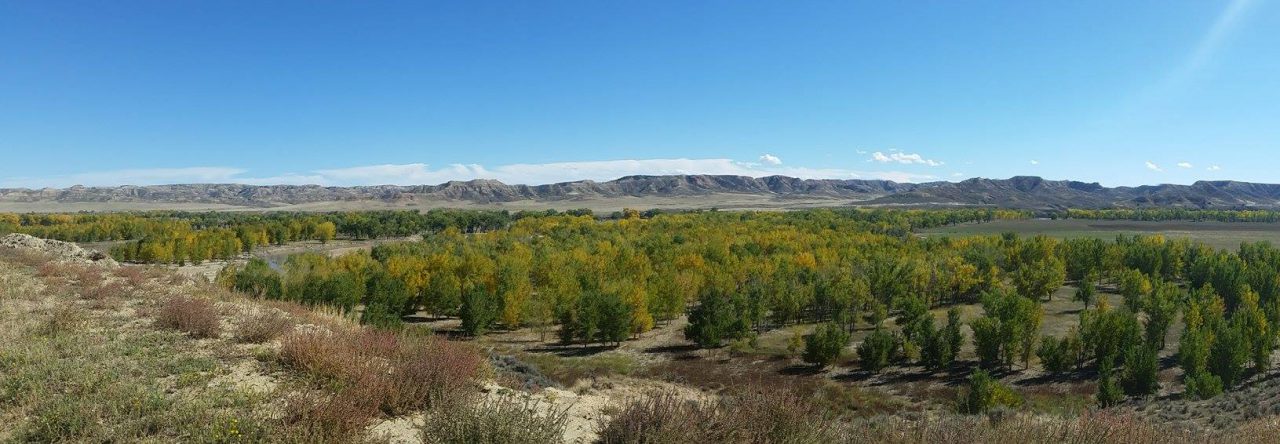
The biggest disadvantage to living on the east coast and wanting to hunt out west is the sheer distance and time it takes to get out there. This doesn’t allow for easy preseason scouting. Unless you have a private jet at your disposal you’re going to want to find other avenues to scout. I use Eastmans forum or Randy Newberg’s HuntTalk forum. They both have experienced DIY hunters who always have good tips, advice for beginners, and good information on gear. With that being said if you’re planning a hunt to the middle of no where that not many people have traveled, you may not get as much information as you’d like.
Google maps and Google earth is an amazing tool when it comes to scouting. The terrain feature on maps allows you get a pretty good idea of the topography of the land. In some cases google maps and earth, will show trails in the area so you can better plan a travel route.
Federally managed land is by far the best option when it comes to finding public land to hunt. According to the Bureau of Land Management (BLM) you can camp on any BLM land for 28 days in the same spot before you have to move 5 miles. This gives you plenty of hunting time in one particular area. The national forest service also allows for ‘dispersed camping’ in the same area for up to 16 days before having to move 5 miles. I called the BML before going out for our trip to verify that there were not any special requirements for camping and gave them an idea of where I wanted to camp to make sure it was open to the public. They were more than helpful and let me know that as long as you stuck to dirt roads you could camp alongside anywhere you could find a spot on public land.
The difficult thing about this, that people on the east coast have a hard time figuring out are the private roads out west. If a road travels through someones private property and it is not maintained by the county then a private resident is within their legal right to close the road off as private. The roads can be scarcely posted and their is little information online that tells you which roads are public and which ones are private. I used google maps to look at highways or roads traveling through small towns to figure out at least some of the public roads. The county websites sometimes have map systems that show you which roads they maintain, although some of the county websites could be a little more user friendly when it comes to this. Once you’ve identified the public roads its easy to look at a BLM map and see where the public roads cross BLM, these are the areas that are open for camping.
We were fortunate to identify a few potential camping locations in case we got there and the area was packed with hunters we could always pick up and go with a different location. Luckily we found a spot at the end of a 3 mile dirt road that took us deep into public land and had no other hunters. The section of BLM we were on was 60,000 acres of BLM land and a few extra thousand acres of accessible state ground. This wasn’t all one block of land, it had private land parcels mixed in with it, but it was all accessible if you wanted to walk it. Many of the forum users were adamant that if you got out of the truck and just walked you’d have high odds of success.
Another great resource is the local fish and game department, I called out to the local office in the area we were hunting and asked a ton of questions. The receptionist put me in touch with one of the game wardens who gave me some good information. Things to think about when talking to the biologist is how bad have the winter kills been in the last few years? How successful was the harvest the previous year for the area? What’s the most common game violations they see from out of state hunters? Their are probably lots of questions that come to mind, I’d recommend having a list of a few of the most important ones before calling. The fish and game department probably get quite a few calls throughout the year and they probably increase in volume as hunting season gets closer, so tying them up on the phone lines isn’t always the best use of their time.
 WayPoint Hunting